You come to Malibu for the ocean, light, and that deep sense of retreat. The question is where you’ll find your version of it. Do you want toes-in-the-sand mornings, big-sky sunsets from a perch above the surf, or quiet acreage tucked into the Santa Monica Mountains? This guide helps you compare Malibu’s three signature settings — beachfront, bluff-top, and canyon — so you can match the lifestyle you want with the risks, costs, and permits you need to understand. Let’s dive in.
Beachfront: step-to-sand living
Beachfront gives you immediate beach access and the most immersive ocean experience. Neighborhoods like Carbon Beach, Broad Beach, and Malibu Colony are examples of where this lifestyle concentrates. Inventory is scarce, and the lifestyle premium is real.
What you’ll love
- Direct, step-to-sand access and constant ocean presence.
- Iconic views and strong privacy in areas with limited public access.
- High photographic and market appeal for future resale.
What to watch
- Coastal hazards: storm wave runup, coastal flooding, and long-term sea-level rise. Many oceanfront parcels fall within FEMA flood designations that can trigger flood insurance and elevation requirements. Use the FEMA Flood Map Service Center to verify a parcel’s status and requirements.
- Shoreline policy: California Coastal Commission guidance prioritizes setbacks and generally limits new shoreline armoring. This affects whether structures can be protected or rebuilt in place over a 100-year design life. Review the Commission’s policy resources in the ReCAP executive summary and project-specific decisions.
- Maintenance and systems: salt air accelerates corrosion; coastal-grade materials and equipment matter. Expect higher upkeep and more specialized consultants.
Best for you if
- Direct ocean access is your top priority.
- You’re comfortable budgeting for higher insurance, maintenance, and permitting complexity.
- You value blue-chip appeal and can be patient for the right parcel and orientation.
Bluff-top: panoramic privacy
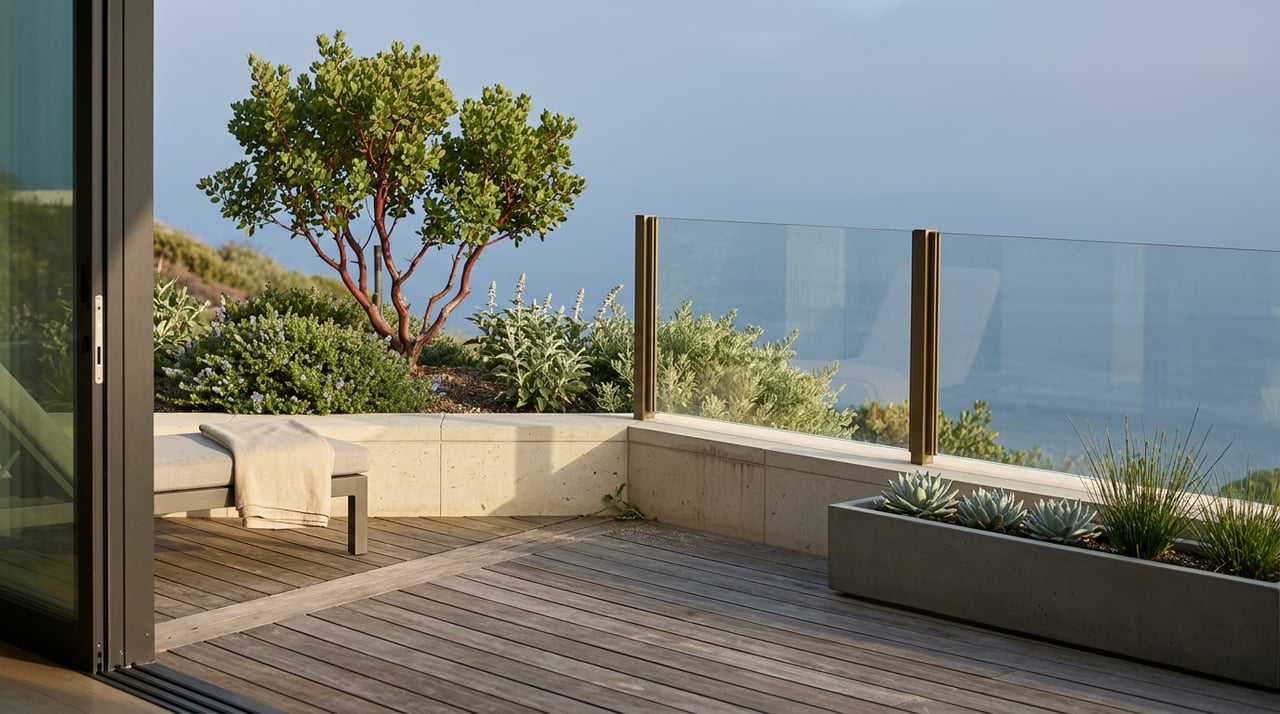
Bluff-top homes sit above the water on seacliffs or elevated coastal terrain. You get sweeping ocean views, more privacy than many beach lots, and often more usable land than a narrow beachfront parcel.
What you’ll love
- Elevated, panoramic views and dramatic sunsets.
- A bit of remove from sand-level activity, with a quieter feel.
- Potentially larger lots than tightly packed beachfront rows.
What to watch
- Geohazards: bluff retreat and slope stability drive design and setbacks. The Coastal Commission requires siting that accounts for projected 100-year bluff retreat without reliance on armoring. Expect geotechnical reports, bluff-edge surveys, and foundation solutions like deep piles or caissons for significant projects. See the Commission’s technical guidance and decisions for how setbacks are evaluated.
- Permitting timeline: geotechnical work and coastal permitting can add time and cost. Have your consultants lined up early.
Best for you if
- You prioritize big views and privacy over direct sand access.
- You’re open to engineering-driven solutions and careful siting.
- You want a balance of coastal living with a slightly calmer setting.
Canyon: space, trees, quiet
Canyon homes sit inland in the Santa Monica Mountains, such as Trancas Canyon and Malibu Canyon pockets. You trade immediate ocean frontage for land, serenity, and a nature-forward lifestyle.
What you’ll love
- Larger lots, more greenery, and room for gardens or equestrian uses in some areas.
- A deeper sense of retreat with trail and mountain access nearby.
- Often lower list prices than direct beachfront, while still within Malibu’s premium market.
What to watch
- Wildfire exposure: large portions of Malibu’s canyons and coastal slopes are classified as Very High Fire Hazard Severity Zones. Confirm your parcel on CAL FIRE’s official maps and plan for defensible space, fuel modification, and hardening. Check the CAL FIRE FHSZ map for Los Angeles County.
- Access and evacuation: some canyons have limited road egress that can affect planning and insurance.
Best for you if
- You want space, seclusion, and a nature-forward lifestyle.
- You’re comfortable planning for wildfire mitigation and insurance diligence.
- You prefer a quiet setting within quick reach of PCH and beaches.
Hazards that shape value
Understanding Malibu’s natural and regulatory landscape will help you protect long-term value and avoid surprises.
Coastal flooding and sea-level rise
Beachfront parcels can sit within FEMA Special Flood Hazard Areas. If so, most lenders require flood insurance and elevation or floodproofing measures. Verify zone status in the FEMA Flood Map Service Center. For forward-looking exposure, visualize tide scenarios and shoreline change with the NOAA Sea Level Rise Viewer. These tools inform siting, renovation feasibility, and insurance expectations.
Bluff stability and coastal setbacks
For bluff-top properties, long-term bluff retreat and factor-of-safety calculations drive setbacks and permitting. The Coastal Act and Malibu’s Local Coastal Program require development that remains stable for its expected economic life without relying on future armoring. Review the City’s LCP/LIP standards and the Commission’s decision guidance and staff reports before you plan additions.
Wildfire and evacuation
Wildfire is the primary hazard inland and on coastal slopes. CAL FIRE’s updated maps show much of Malibu in Very High zones. This affects insurance availability, premiums, and, in some cases, financing. Use the official FHSZ map to verify your parcel, then plan for hardening, defensible space, and realistic evacuation routing.
Septic and wastewater
Large parts of Malibu rely on onsite wastewater treatment systems. Advanced treatment is often required for beachfront and sensitive areas, which can constrain remodel footprints or trigger system upgrades. Read Malibu’s Local Coastal Program and wastewater standards to understand how OWTS rules affect siting and rebuilds. Start with the City’s LCP/LIP framework in ecode360 and the City’s OWTS provisions here.
How to read Malibu pricing
Malibu is a low-volume, high-variance market. Public portals use different geographies and samples, which means median list and sold numbers can diverge widely from month to month. One large sale can skew a neighborhood median.
A practical way to set expectations
- Think in ranges by setting: beachfront at the top of the spectrum per square foot, bluff-top below that, canyon more accessible while still premium.
- Triangulate multiple sources and prioritize closed-sale comps from the local MLS for the most reliable picture.
- Compare like with like: direct waterfront vs bluff with true ocean views vs inland canyon lots. Micro-location and orientation can shift values materially.
Your due diligence checklist
Use this short list early in your search to save time and uncover deal-shapers.
- Hazard maps and viewers: check FEMA flood zones in the Flood Map Service Center. Visualize scenarios with the NOAA Sea Level Rise Viewer. Confirm wildfire severity on the CAL FIRE FHSZ map.
- Permit and policy history: pull Coastal Development Permit records and any appeals with the City and the Coastal Commission. Background policy resources live on the Commission’s ReCAP page.
- Geotechnical reports: for bluff-top or slope sites, request soils data, bluff retreat rates, and foundation recommendations that match current standards.
- OWTS and utilities: ask for septic system records, inspections, and required upgrades. Review Malibu’s LCP/LIP and OWTS rules in ecode360.
- Insurance and insurability: get pre-quotes from at least two carriers and the California FAIR Plan if needed. The Department of Insurance posts context and orders, such as this recent FAIR Plan order, that reflect evolving availability.
- Title and easements: for beachfront, confirm any recorded lateral access or public easements. Broad Beach’s litigation history, summarized in a California appellate decision, shows how complex shoreline protection and access can become.
- Market comps and liquidity: assemble recent closed sales in your exact setting and sub-area, then sanity-check with current actives to gauge momentum and time on market.
Quick choose guide
Use these snapshots to align your priorities fast.
- Choose beachfront if you want daily sand access, the most immersive ocean living, and you are prepared for coastal permitting, flood considerations, and higher maintenance.
- Choose bluff-top if you prioritize panoramic views and privacy with a bit more land, and you are comfortable engaging geotechnical experts and planning for setbacks.
- Choose canyon if you value space, greenery, and quiet, and you are ready to plan for wildfire mitigation, insurance diligence, and canyon road logistics.
Final thought
There is no wrong choice in Malibu, only the right fit for your lifestyle and risk comfort. If you approach your search with clear priorities and solid due diligence, you will feel confident when the right property appears. If you want a design-forward, boutique team to guide you through hazards, permits, and presentation from the start, reach out to Nuhaus - Olga Crawford. Let’s tell your home’s story.
FAQs
What is the main difference between Malibu beachfront, bluff-top, and canyon homes?
- Beachfront gives step-to-sand access and the highest lifestyle premium, bluff-top offers panoramic ocean views with more privacy, and canyon homes trade coastline proximity for larger lots and seclusion.
How do coastal policies affect oceanfront and bluff-top properties in Malibu?
- The Coastal Act and Malibu’s Local Coastal Program require siting that remains stable for an expected 100-year life without relying on new shoreline armoring, which influences setbacks, rebuilds, and whether protective devices are permitted; see the Commission’s ReCAP resources for context.
How can I check flood risk and insurance needs for a Malibu beach house?
What should I know about wildfire risk for Malibu canyon properties?
- Most canyons and coastal slopes show Very High hazard on CAL FIRE’s maps, which affects mitigation requirements, evacuation planning, and insurance availability; verify your parcel on the official FHSZ map.
How do Malibu’s septic rules impact remodels or additions?
- Many areas require advanced onsite wastewater treatment systems that can limit footprint changes or trigger upgrades; review Malibu’s LCP and OWTS standards in ecode360 early in planning.
Why do Malibu price medians look different across websites?
- Providers use different geographies and samples, and Malibu’s low monthly sales volume can skew medians, so compare multiple sources and rely on recent closed-sale comps for decisions.