Malibu Cottages, Estates & Compounds: Which Fits Best?
July 16, 2026
July 16, 2026
Wondering whether a Malibu cottage, estate, or compound fits your life best? It is a smart question, because in Malibu, the difference is not just square footage. It often comes down to lot shape, privacy, accessory structures, and how the coastal setting can affect day-to-day ownership. This guide will help you understand how these three Malibu home archetypes typically differ, where they tend to show up, and what to consider before you tour. Let’s dive in.
In Malibu, cottage, estate, and compound are not official zoning categories. They are market shorthand for different ownership experiences shaped by parcel size, topography, privacy, and how much development a property can support.
That distinction matters in Malibu more than in many other places. The entire city sits in the coastal zone and is governed by the Local Coastal Program, which emphasizes scenic compatibility and minimizing alteration of natural landforms. In practical terms, a home's future remodel potential can be just as important as its current layout.
Malibu's geography helps explain why certain home styles cluster in certain areas. The city describes Malibu as a narrow coastal strip, with a wider center around Point Dume and the Civic Center, plus canyon and ridge development farther inland.
The central beach and lagoon corridor is the clearest place to look for cottage-style homes. City documents identify Malibu Colony, Malibu Road, and Serra Retreat as part of the central single-family corridor around Malibu Lagoon and the Civic Center.
Malibu Colony is especially important to this story. The city notes that the area began with narrow 30-foot oceanfront lots and small beach cottages in the 1920s, which still shapes how buyers think about cottage-style living in Malibu today.
Point Dume, Broad Beach, Malibu Park, and some canyon and ridge locations are stronger fits for estate-style and compound-style homes. The Local Coastal Program describes the greater Point Dume area as having a wider coastal strip and a broad band of residential uses, mostly at one unit per acre or less.
Current city staff reports also describe neighborhoods there with one- and two-story homes, pools, guest houses, detached garages, and tennis courts. Malibu Park is described as a long-established, mostly built-out neighborhood with varied lot sizes, while Broad Beach is a single-family residential neighborhood in western Malibu.
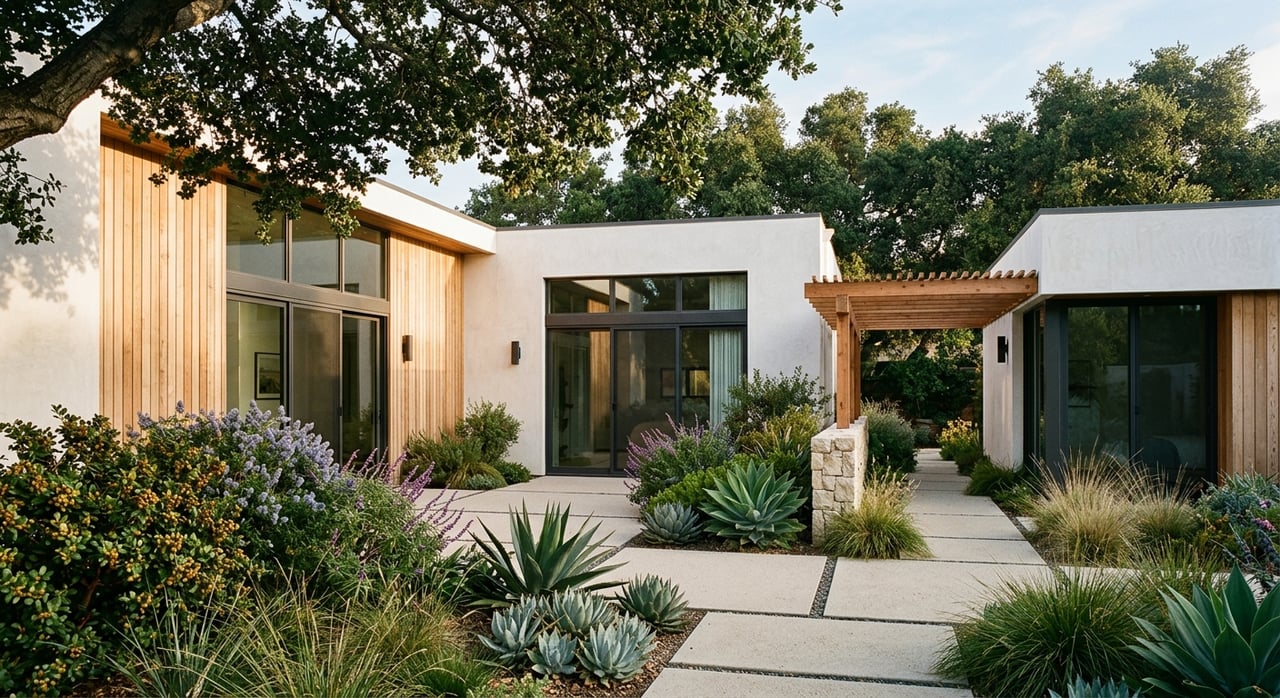
A Malibu cottage is usually the most character-driven of the three archetypes. Think smaller footprint, a simpler layout, and a closer connection to older beachside neighborhood patterns.
These homes often appeal to buyers who want charm and beach proximity more than maximum acreage or a long list of accessory spaces. In places tied to Malibu's earlier development patterns, the lifestyle can feel more intimate and more connected to the coastline.
A cottage typically has a smaller floor plan and fewer secondary structures. The indoor-outdoor flow may still be appealing, but it is usually simpler than what you would find in a larger estate or compound.
That smaller scale can be part of the draw. For many buyers, it creates a more relaxed, lower-key way to enjoy Malibu.
Privacy is usually lower in cottage-style settings unless the home sits within a more secluded enclave. Serra Retreat is a useful example, since the city describes it as a community of 96 single-family properties with two guard-gated drives, giving even smaller homes there a more tucked-away feel.
Maintenance can be lighter when the grounds are smaller, but Malibu ownership still comes with local considerations. Beachfront and coastal homes may face issues tied to tidal inundation, storm flooding, wave overtopping, shoreline erosion, bluff erosion, and onsite wastewater systems.
A cottage may be the right fit if you value:
If your goal is charm over scale, this category often deserves a close look.
A Malibu estate is usually a larger single-family residence on a more generous lot. It tends to offer a more polished single-home profile, with clearer separation between indoor living, outdoor entertaining, and neighboring properties.
For many buyers, the appeal of an estate is balance. You get more space, more privacy, and more outdoor amenities without necessarily taking on the complexity of a multi-structure property.
City project files in areas like Point Dume and Broad Beach describe homes with pools, guest houses, detached garages, basements, and tennis courts. That gives a helpful picture of what estate-style living can look like in Malibu.
These homes often include broader outdoor living zones, more landscaping, and more room for recreation. In Malibu Park, varied lot sizes and view-oriented homes add another layer of appeal for buyers who want scale without losing a sense of place.
Privacy is usually better than in cottage neighborhoods because lots may be wider and driveways longer, and because Malibu's terrain naturally creates separation. Mountains, canyons, bluffs, and ridgelines all shape how homes sit on the land.
The tradeoff is that upkeep often becomes more involved. Larger grounds can mean more landscaping, irrigation, and drainage, and Malibu's steep terrain, geologic hazards, environmental rules, and reliance on private septic systems can make rebuilding or retrofitting more complex and expensive.
An estate may be the best match if you want:
If you want a refined Malibu property without the organizational burden of multiple structures, this archetype often hits the sweet spot.
A Malibu compound is best understood as a larger holding built around flexibility. Instead of one main house alone, a compound often includes a main residence plus one or more accessory dwellings or support structures.
In Malibu, that can mean a guest house, ADU, detached office, gym, cabana, pool house, or other secondary spaces. Some compounds may also involve merged parcels or a shared driveway that makes the property feel more like a private campus.
The city defines an ADU as a smaller independent dwelling on the same lot as a stand-alone single-family home. Current Malibu project files also show accessory structures such as second units, guest houses, detached garages, pools, and tennis courts.
A city example for Malibu Coast Estate includes guest units, garages, pools, cabanas, sports courts, gyms, and home offices as accessory uses. That mix helps explain why compounds appeal to buyers who want both privacy and flexibility.
Of the three archetypes, compounds usually offer the highest level of privacy. Gates, larger setbacks, landscaping, and topographic screening can all contribute to that feeling, especially in Point Dume, canyon roads, and some hillside settings.
They also tend to be the most demanding to own. More structures mean more systems to inspect, more landscape to manage, and more permitting history to review.
Beachfront compounds can bring added layers as well. The city notes that areas such as Broad Beach face erosion and flooding exposure, and rising groundwater can create septic-related challenges on beachfront parcels. Utility assessment districts also exist in places like Broad Beach and Carbon Beach, which can affect ownership costs.
A compound may be the strongest fit if you need:
If your lifestyle calls for room to host, work, and spread out, a compound can offer options that a single-house property may not.
If you are comparing these archetypes, it helps to focus less on labels and more on how you actually want to live in Malibu. Your best fit usually comes down to tradeoffs between charm, privacy, flexibility, and upkeep.
Here is a simple lens:
In Malibu, the right questions can save you time and sharpen your decision-making early. Because ownership conditions vary widely by location, two homes with a similar look can come with very different long-term implications.
Before you get too attached to a property, ask about these points:
These questions matter because Malibu's Local Coastal Program governs development citywide, onsite wastewater treatment is standard for much of the city, and assessment districts exist in certain enclaves.
In Malibu, choosing between a cottage, estate, and compound is really about choosing an ownership rhythm. A smaller beachside home may give you character and ease. A larger estate may offer comfort and entertaining space. A compound may create a more private and flexible long-term setup.
The best choice is the one that supports how you want to live, host, work, and care for property in a coastal environment shaped by topography and local rules. When you view these homes through that lens, the right path usually becomes much clearer.
If you are exploring Malibu with a design eye and want thoughtful guidance on fit, setting, and property potential, Nuhaus - Olga Crawford can help you navigate the options with care and local perspective.
Stay up to date on the latest real estate trends.